LoRa Mesh · AES-256 · No Internet Required
ATLAS
NODE
Off-Grid · Encrypted · Resilient
Full-featured offline messenger. Text, voice, photos, maps & AI — running on LoRa radio. No towers, no SIM, no internet. Just physics.
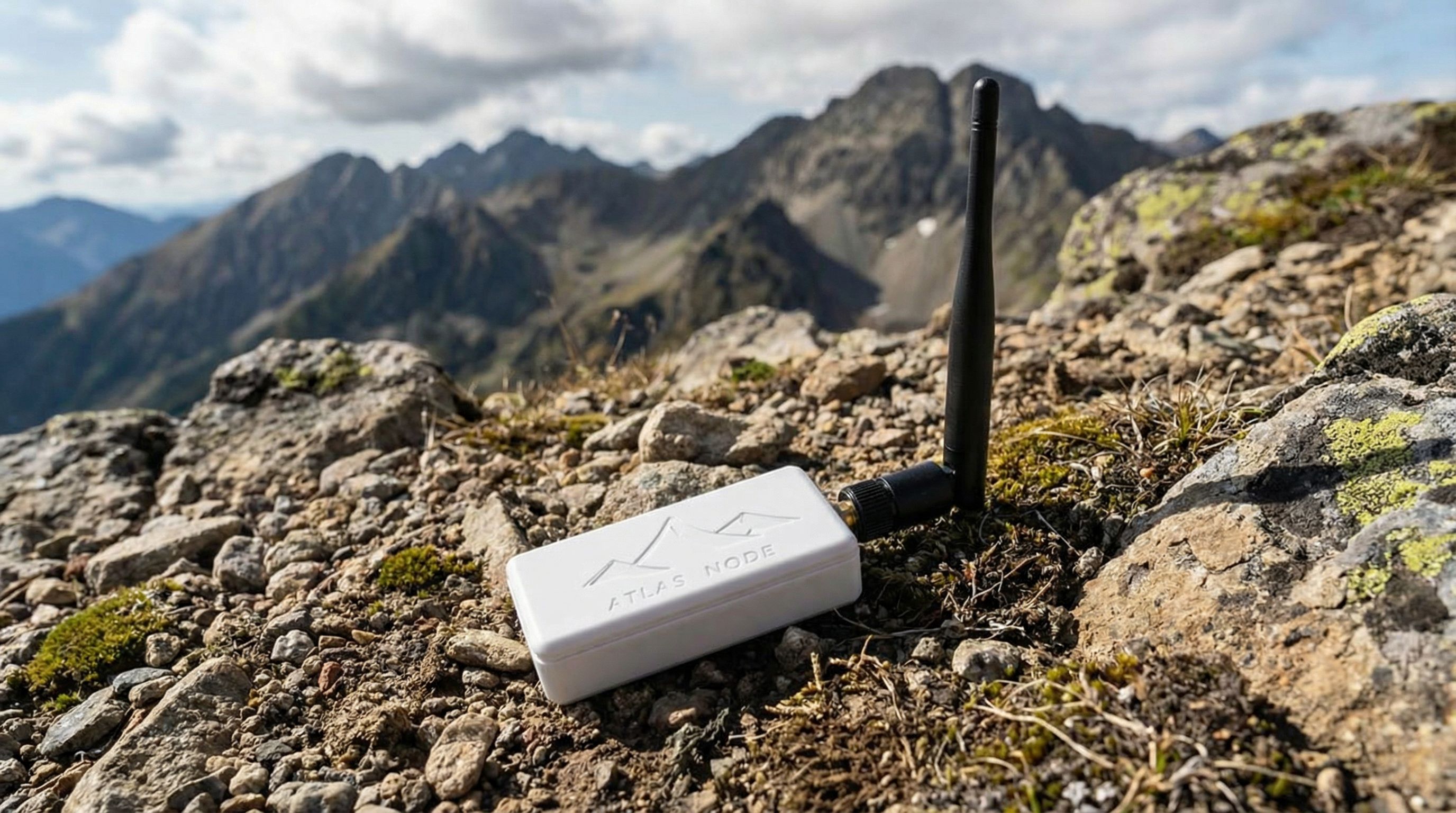
Off-Grid · Encrypted · Resilient
Full-featured offline messenger. Text, voice, photos, maps & AI — running on LoRa radio. No towers, no SIM, no internet. Just physics.
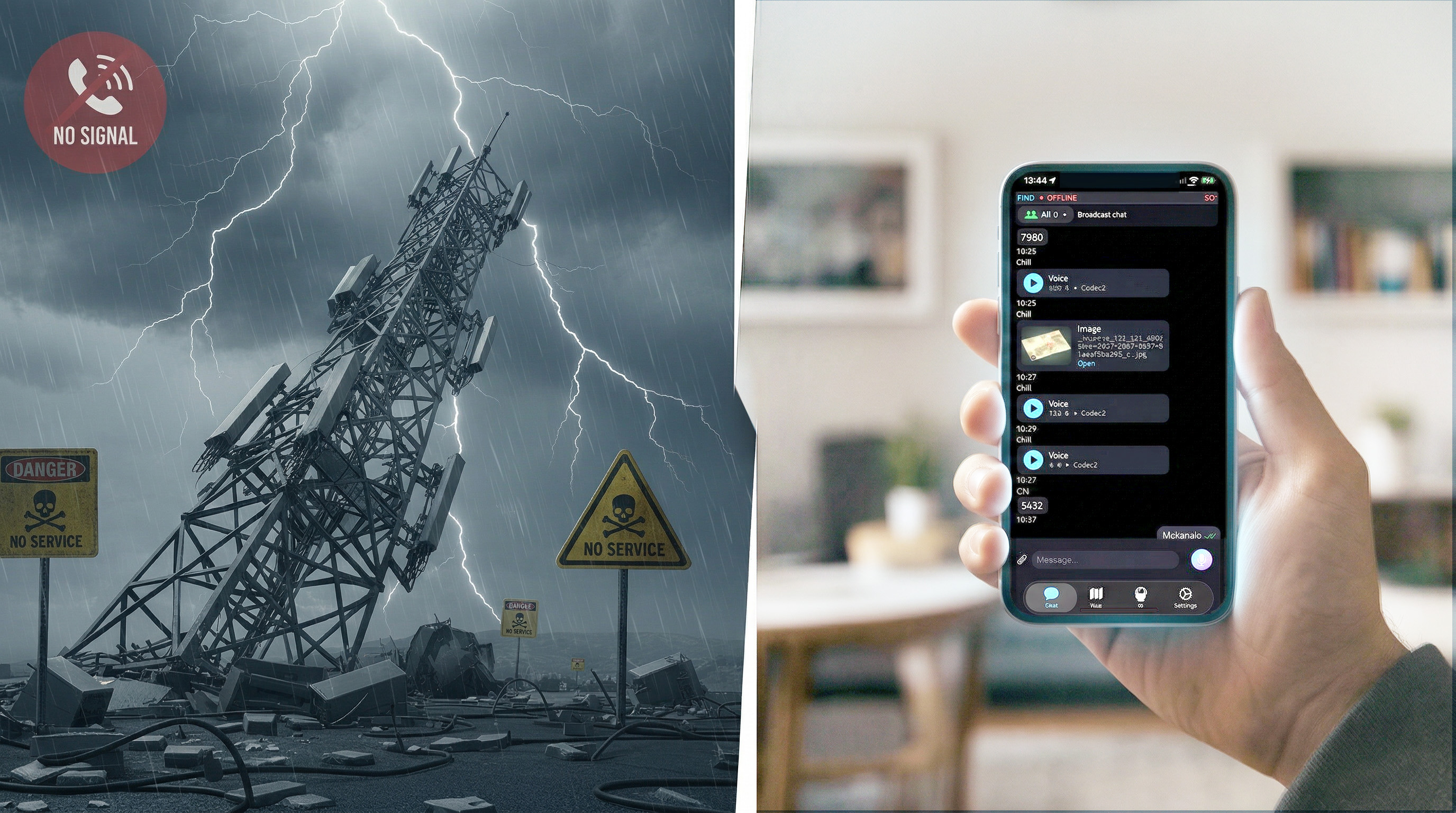
Mountain summits. Overcrowded festivals. Power outages. Remote terrain. In that moment, your smartphone is a beautiful, useless screen.
ATLAS NODE combines long-range LoRa radio technology with a full-featured mesh-networking app. Like WhatsApp — but without the internet. A small device connects to your phone via Bluetooth or USB-C and gives you a complete messenger with zero network dependency.
Send messages, voice, photos, files. See your group on the map. Share location in real time. All encrypted. All private. All offline.
Plug into your phone via USB-C or pair via Bluetooth. No drivers, no setup wizard. Ready in seconds.
Available for iOS, Android, Windows, Mac and Linux. The interface is as familiar as any messenger you've used before.
Messages travel device-to-device via LoRa radio, with real-world range depending on terrain, buildings and node spacing.
2 devices: direct link. 3 devices: the middle unit bridges, doubling range. 10+ devices: city-scale resilient mesh with no single point of failure.
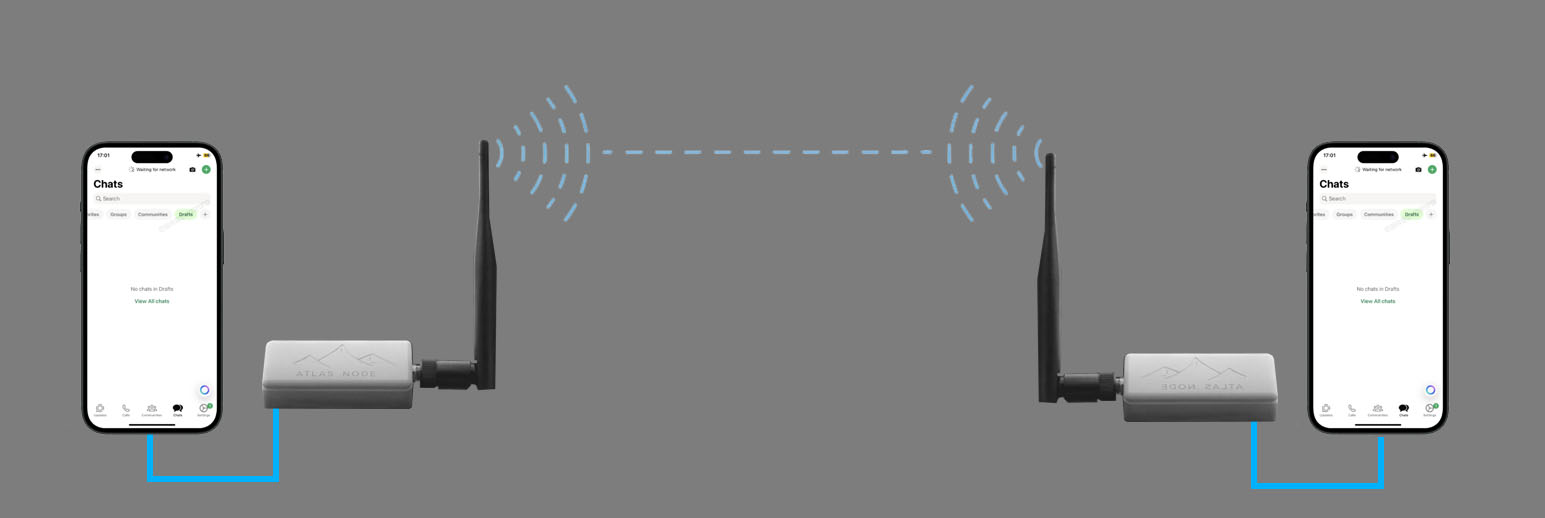 Phone -> ATLAS -> mesh -> ATLAS -> phone
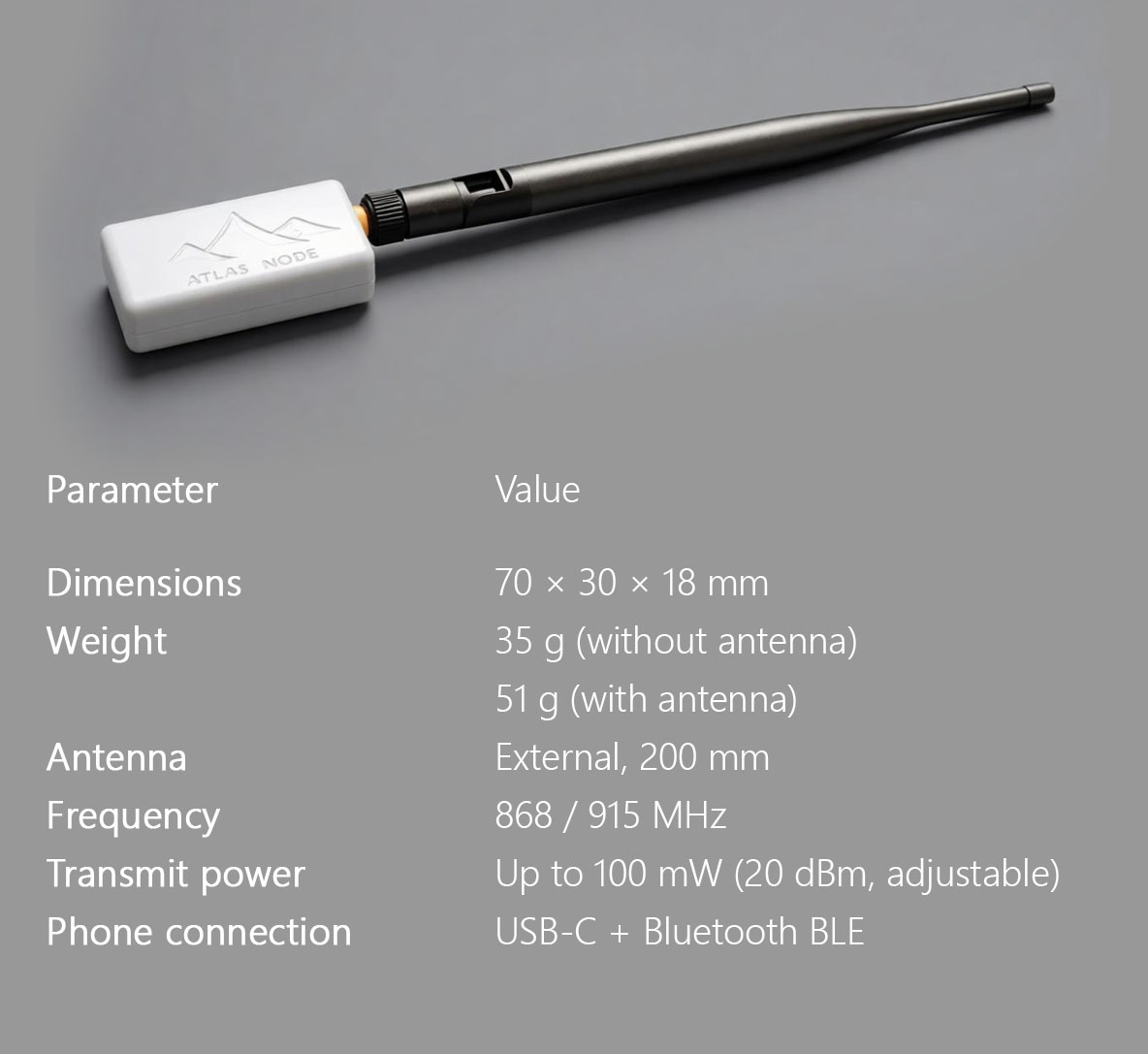
Peer-to-peer only. Nothing to breach, intercept, or subpoena.
No accounts, no registration, no fingerprinting.
Not on a map — in the situations where communication actually breaks.
ATLAS isn't about coverage zones or infrastructure. It's about staying connected when there is no infrastructure at all.
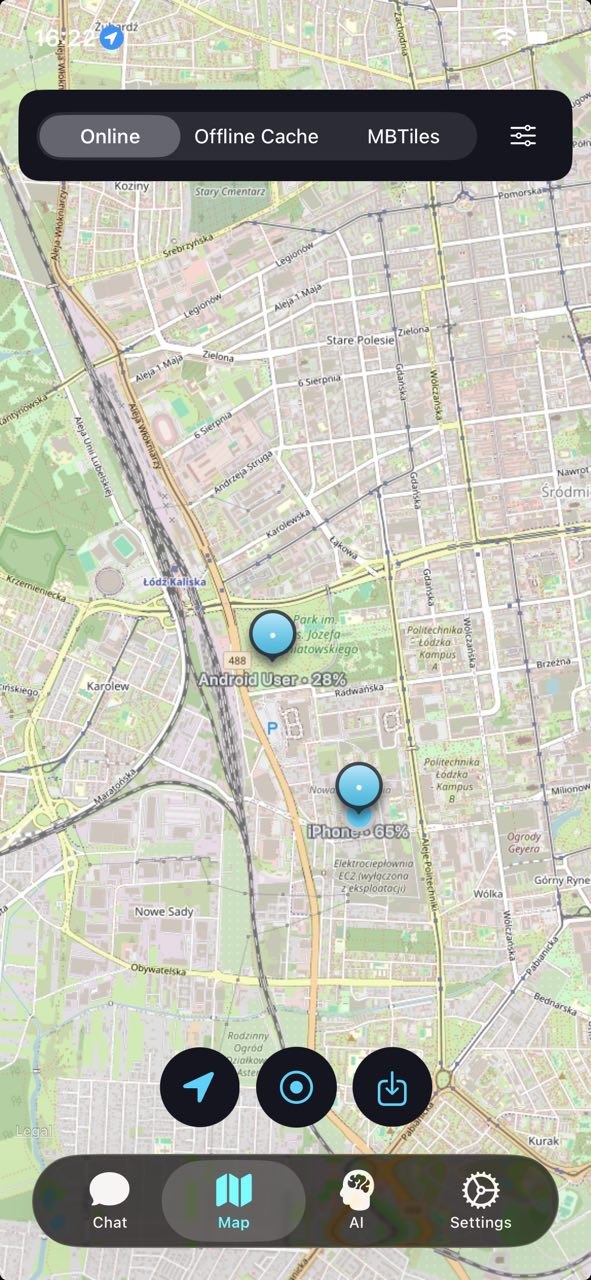
Where it matters:
Remote locations where cellular networks don't exist
Overloaded environments where networks fail under pressure
Emergency scenarios where reliability is critical
Direct device-to-device communication without intermediaries
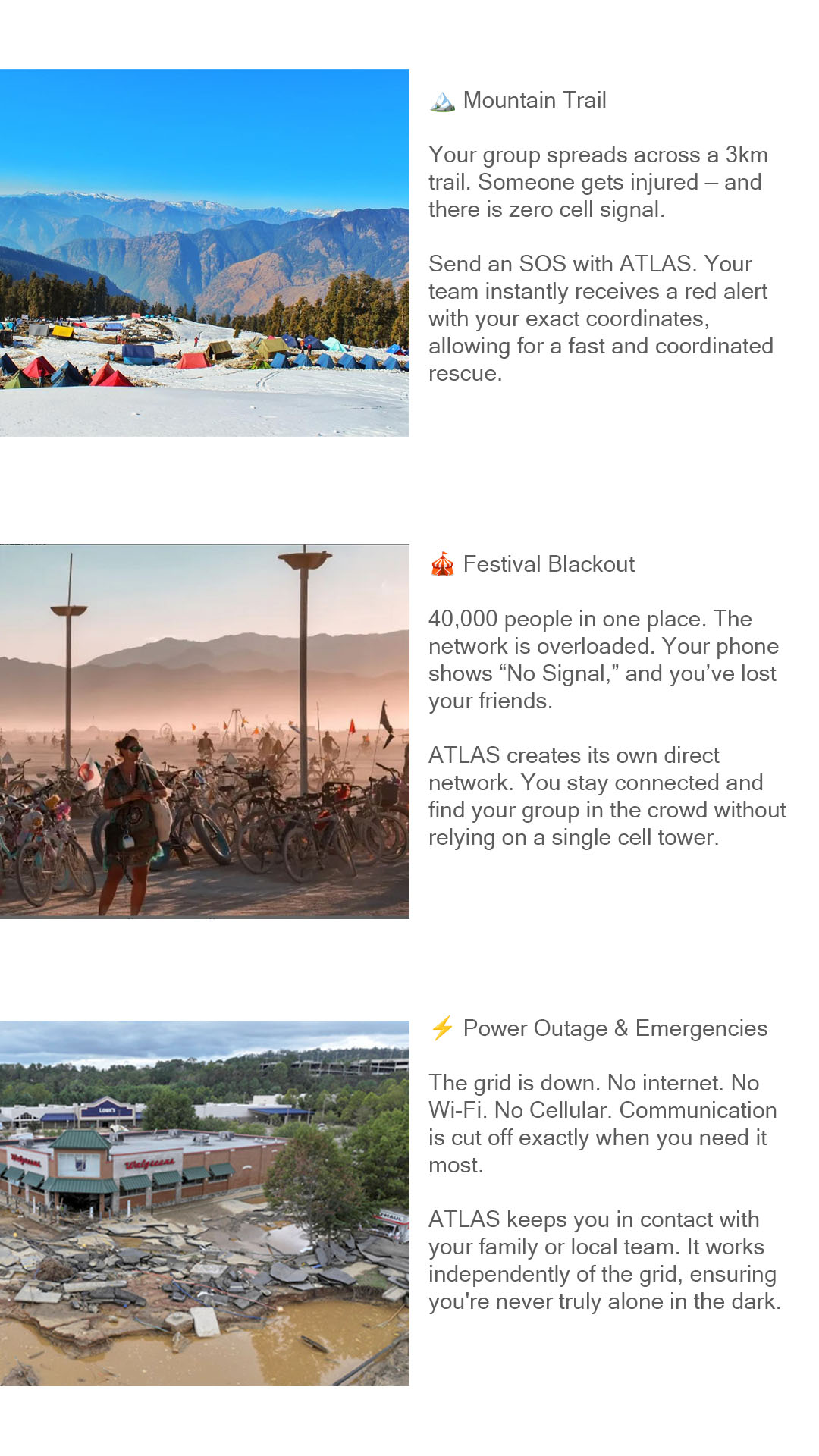
ATLAS creates its own quiet network when public infrastructure is saturated.
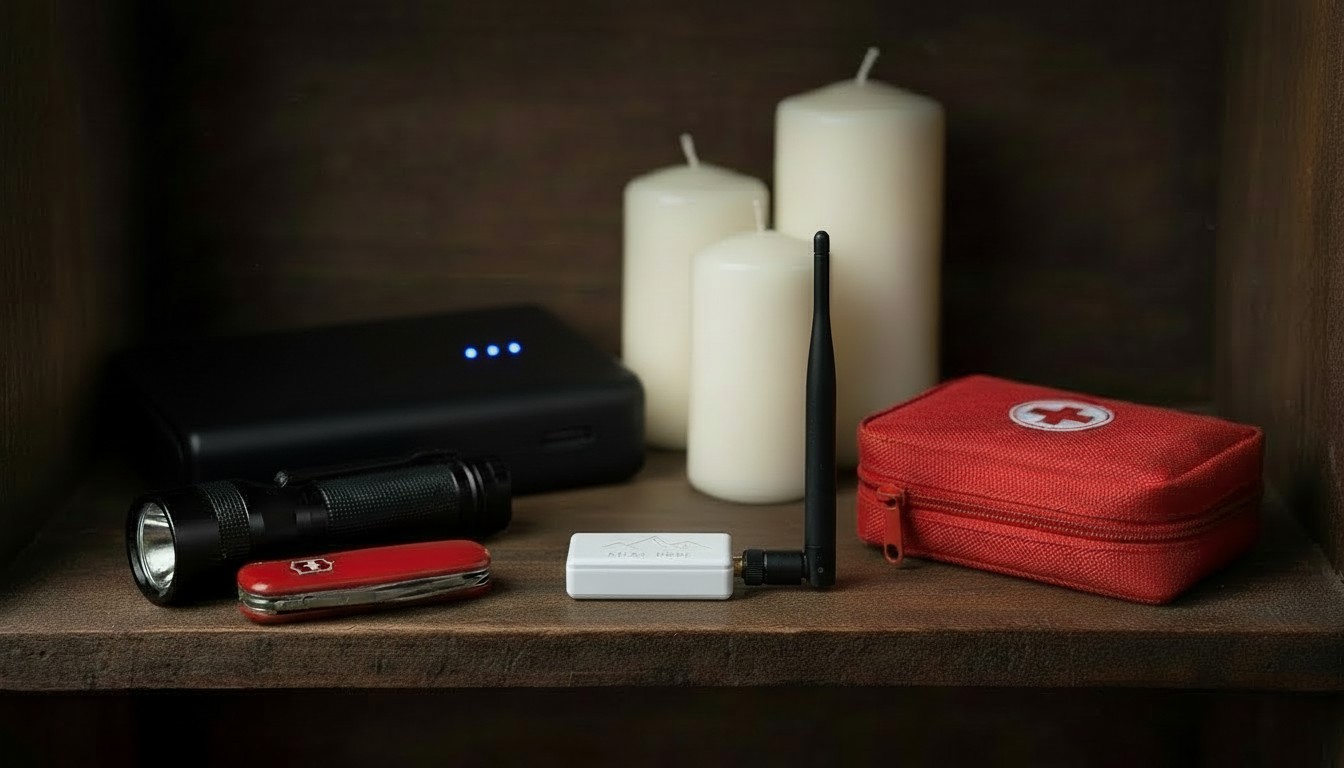
A small node beside lights, batteries and first aid turns emergency gear into a communication system.
Just a self-forming network that works as long as your devices are alive. Communication doesn't disappear when the signal does. It adapts. Open on YouTube